
How Kristina Found Coordinated Care for Adult 22q
October 16, 2026
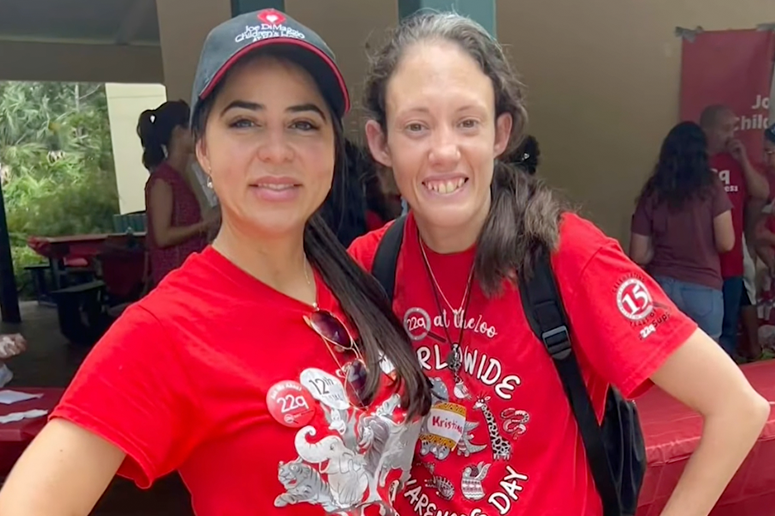
Article Highlights
- 22q11.2 deletion syndrome is genetic. Present at birth, the disorder is caused by a missing section, or microdeletion, of chromosome 22.
- Some signs are subtle, leading to missed diagnoses. Some patients aren’t diagnosed until adolescence or adulthood.
- The disorder can cause a range of health problems. 22q11.2 deletion syndrome can cause problems with the heart, immune system, calcium levels, thyroid, mental health and other body systems.
- Health problems from 22q11.2 deletion syndrome continue for a lifetime. The condition is lifelong, but health needs change with age. Some problems, such as thyroid disease and mental health conditions, become more common in adolescence and adulthood.
Kristina Buchholz faced unexplained, recurrent infections and a range of health problems as a child. When she began experiencing seizures at age 15, a diagnosis finally surfaced.
Kristina learned she had 22q11.2 deletion syndrome, also called DiGeorge syndrome or velocardiofacial syndrome. It's a genetic disorder caused by a missing section of chromosome 22. As the most common microdeletion syndrome, 22q occurs in approximately 1 in 2,000 live births.
For Kristina, a lack of diagnosis meant more than a decade of seemingly unrelated, recurring ear infections, pneumonia, thyroid problems and seizures. After she was diagnosed, she received care at Joe DiMaggio Children's Hospital. But as Kristina transitioned to adulthood, she found herself navigating numerous specialists who often had limited experience with 22q.
Schedule an appointment with an Allergy and Immunology specialist
954-265-3030Collaborative Care for Pediatric 22q
In 2018, Hanadys Ale, MD, allergist and immunologist and medical director of the Multidisciplinary 22q Clinics at Joe DiMaggio Children’s Hospital and Memorial Healthcare System, and a team of pediatric specialists at Joe DiMaggio Children's Hospital launched the Pediatric 22q Multidisciplinary Clinic, the first of its kind in Florida. Their goal was to address the complex needs of children and families affected by the genetic disorder.
According to Dr. Ale, 22q11.2 deletion syndrome can cause health problems in nearly every body system, including:
- Endocrine (hormone) disorders, such as low calcium and thyroid disease
- Gastrointestinal issues
- Heart problems
- Immune system problems
- Kidney differences
- Learning and behavioral challenges
- Mental health conditions, such as anxiety
- Palate and speech differences
Some individuals are diagnosed in infancy because of congenital heart defects or other obvious medical concerns. However, others may not receive a diagnosis until adolescence or adulthood due to more subtle developmental, behavioral or medical challenges.
One Patient's Story Highlights the Need for Adult Care
Dr. Ale met Kristina at a 22q awareness event a few years ago and began treating her in 2024. Dr. Ale then invited Kristina to a "Meet the Patient" seminar as part of an immunology course she teaches at Florida International University Herbert Wertheim College of Medicine. Here, Kristina shared her 22q journey with Dr. Ale's class, leaving a lasting impact on students.
"It was one of those moments when a diagnosis stops being something students learn from a textbook and becomes a person they will remember forever," Dr. Ale recalls.
Kristina's story reinforced the importance of what Dr. Ale and her colleagues were already building: continued support under one roof for adults with genetic disorders such as 22q.
Multidisciplinary Support for Adults With 22q
Children with 22q deletion syndrome don't outgrow it. Instead, their health needs change with age. Many adults are left to manage the disorder with multiple specialists who may be unfamiliar with 22q. The program expansion addresses those needs, explains Dr. Ale.
In 2023, Dr. Ale and colleagues at Joe DiMaggio Children’s Hospital launched the Adult 22q Multidisciplinary Clinic at Memorial Regional Hospital. Together, the pediatric and adult clinics create a continuum of care that supports patients from childhood through adulthood. This coordinated approach remains uncommon for individuals living with complex genetic conditions.
Kristina was thrilled and honored to be the clinic's first patient. "Having something right here in my backyard has been amazing," she says. "It's like a safety net. You know physicians are actually going to hear you."
Among the first of its kind in the country, the adult 22q clinic brings together Memorial’s specialists familiar with the disorder, including:
- Cardiologists
- Endocrinologists
- Genetic counselors
- Geneticists
- Immunologists
- Psychiatrists
- Social workers
This multidisciplinary approach enables patients to receive care from multiple specialists during a coordinated visit, rather than navigating separate appointments across different healthcare systems.
For patients like Kristina, this means coordinated care for her 22q-related health needs from doctors knowledgeable about the varying health manifestations of the disorder.
"Kristina's journey illustrates one of the most important reasons we created the Adult 22q Multidisciplinary Clinic," says Dr. Ale. "22q11.2 deletion syndrome does not end when a child turns 18."
Today, Kristina continues receiving comprehensive, expert care through Memorial’s adult 22q clinic. Her experience highlights the importance of ensuring that patients with genetic conditions have access to multidisciplinary care as they transition from childhood into adulthood.
Learn more about Memorial’s adult and pediatric clinics for patients and families affected by 22q.
Schedule an appointment with an Allergy and Immunology specialist
954-265-3030Related Providers
-


 Nicole Akar-Ghibril, MD Allergy & Immunology, Pediatric Immunology and Allergy
-
 Hanadys Ale, MD Allergy & Immunology, Pediatric Immunology and Allergy
-
 Christopher Chang, MD, PHD, MBA Allergy & Immunology, Pediatric Immunology and Allergy
-
 Yatyng Chang, MD Allergy & Immunology, Pediatric Immunology and Allergy
-
 Rini Patadia, DO Allergy & Immunology, Pediatric Immunology and Allergy
