
Lori’s Weight-Loss Surgery Journey to Better Health and Giving Back
April 17, 2026
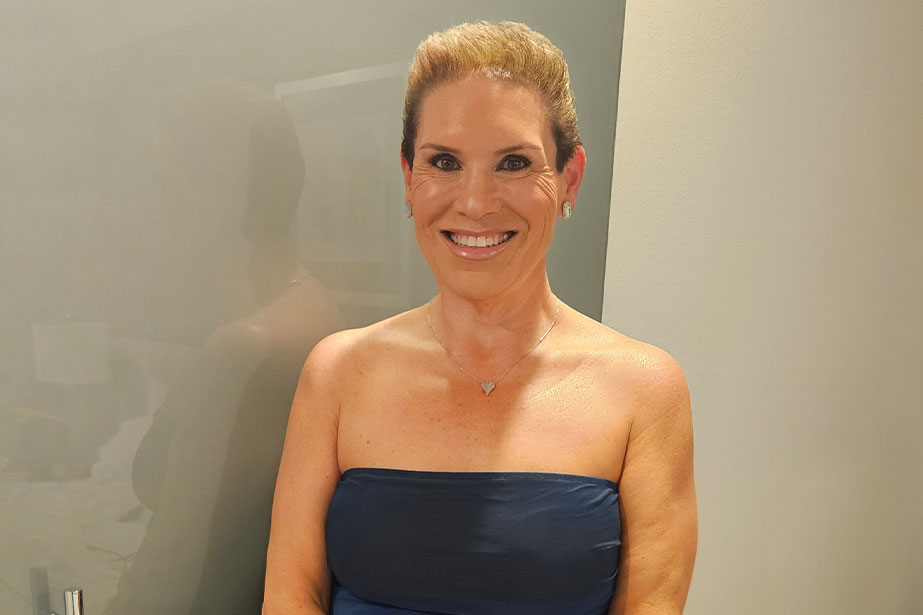
Lori Halpern lost her father at age 66 due to obesity-related health conditions. When she turned 46, the age at which her dad had his first heart attack, she began to worry about her own weight and long-term health.
Self-image had never been an issue for Lori. She was a confident plus-size woman. But she was already prediabetic and living with severe back pain. It was clear what the future might hold if she didn’t make changes.
She became more mindful of her diet and exercise routine. She was also prescribed metformin, a diabetes medication, and began seeing some success.
In 2021, routine bloodwork raised concerns about her HbA1c (a marker for diabetes) and liver function. While the abnormal results were ultimately linked to a gallbladder issue, seeing her HbA1c level increase was a wake-up call. Lori didn’t want to waste any more time.
Since she needed her gallbladder removed, Lori decided to have bariatric surgery at the same time.
I wanted to do everything I could to live longer and meet my grandchildren someday. I knew bariatric surgery could help me do that.
- Lori Halpern
Fast Track to Weight-Loss Surgery
Lori learned about Memorial Bariatric Surgery Centers and Joseph Melendez-Davidson, MD, bariatric surgeon at Memorial Healthcare System, from a friend. Even though her first visit was virtual due to COVID-19, she immediately felt a connection and knew she had found the right doctor.
The waiting period for bariatric surgery can be lengthy. Insurance requirements to document weight-loss attempts often result in a wait of six months or more.
Because Lori was just under her insurance’s body mass index (BMI) requirement, she chose to self-pay for bariatric surgery. Without insurance restrictions, she was able to shorten the preparation timeline.
She participated in a psychological evaluation and nutrition counseling before surgery. These steps ensure patients are prepared to change their habits and have the tools they need to succeed. They are required as part of Memorial’s accreditation through the American College of Surgeons.
Just two months after meeting Dr. Melendez-Davidson, Lori underwent a sleeve gastrectomy.
From living as a plus-size person and working in healthcare, I know there are biases toward people struggling with obesity. When you meet a doctor who’s so compassionate, it’s life-changing.
- Lori Halpern
A Physical and Emotional Journey
Bariatric surgery cannot only transform your body, but also your habits, emotions and sense of identity. Before surgery, Lori worked to accept that she wasn’t “selling out,” but rather prioritizing her health. She also worried about how she would navigate the world in a smaller body.
The weight came off quickly at first, but later stalled because of menopause. Hormone replacement therapy helped her get back on track.
To date, Lori has lost about 80 pounds. With less food noise and fewer cravings, her diet is now focused and intentional. She exercises regularly and has experienced complete resolution of her back pain. Metabolically, she’s never been healthier. All her labs are in normal range, including her blood sugar level, and she has no signs of diabetes.
Despite her success, Lori still finds it hard to fully comprehend her transformation. Seeing before-and-after photos is often the only way she can truly recognize the change.
I'll never forget the first day I went to a department store at the mall, and I wasn’t relegated to the plus-size area.
- Lori Halpern
Finding Purpose in Helping Others
Lori has always been community-minded. After losing weight, she became active on the Memorial Weight-Loss Surgery Program Facebook group. She routinely offers encouragement and support to others navigating their own bariatric surgery journeys.
When cleaning out her closet, she discovered another way to give back. From previous work on the board of Dress for Success Miami, she knew large-size clothes were often in short supply. She posted on the Facebook group asking if anyone needed help donating their clothes. The response was overwhelming.
In that moment, Lori’s nonprofit organization, Pounds of Clothes, was born. She contacted the practice administrator at Memorial’s Bariatric Surgery Center to ask about setting up collection bins. One month later, her nonprofit was official, and the bins were in place. Her first donation of clothes to local community organizations totaled 500 pounds.
Five years later, Pounds of Clothes is still going strong. The organization accepts all sizes, but its core mission is still helping meet the need for large-size clothes.
For those who have recently lost weight, donating clothes does more than help the community. It serves as a meaningful commitment to continue moving forward.
“Bariatric surgery is one of the best things I’ve done,” Lori said. “I feel like I did it exactly when I was supposed to — when I was ready to help myself and others.”
Request a consultation with our obesity medicine specialist or call 954-276-1400.
Lori’s Journey to Better Health
Strength, perseverance, and a powerful transformation shaped by Lori's decision to reclaim her health.


Related Providers
-


 Brett Cohen, MD Bariatric Surgery, General Surgery
 -
 Jeremy Gallego Eckstein, MD Bariatric Surgery, General Surgery
 -
 Emil Matei, DO Bariatric Surgery, General Surgery
 -
 Joseph Melendez-Davidson, MD Bariatric Surgery, General Surgery
